Many local businesses do not have a marketing problem. They have an order-of-operations problem.
They invest in a website before they have clear messaging. They try paid ads before they have enough content to build trust. They post randomly on social media, then conclude that digital marketing “doesn’t work.” In reality, the issue is usually not the channel itself. It is the lack of a structured foundation.
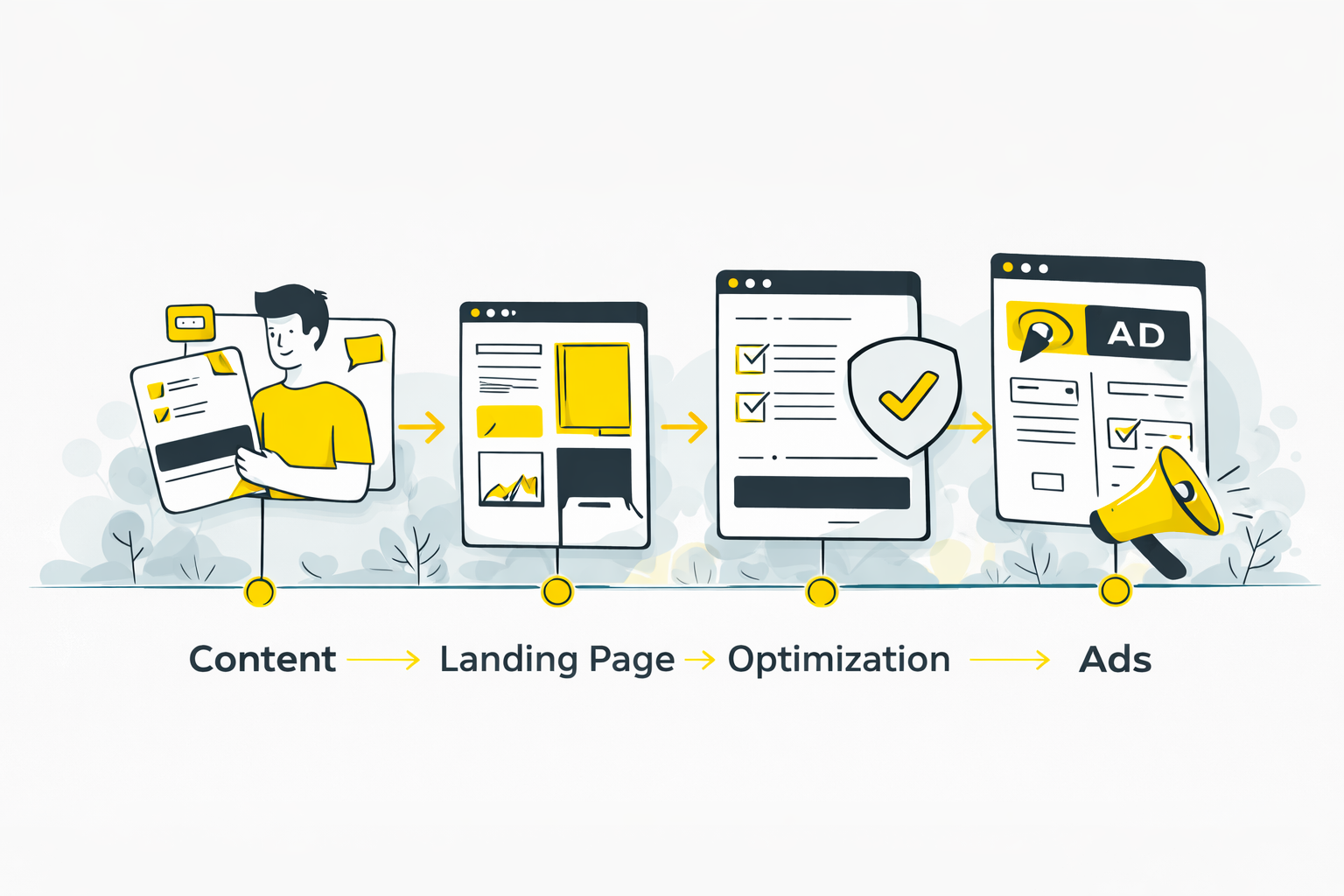
For one local custom furniture workshop we analyzed, the right path was not “launch everything at once.” The strategy was to first build brand presence through content and social media, then launch a focused landing page, and only after that use paid traffic to scale lead generation. The business goals were clear: strengthen online presence, increase local brand awareness, create a steady flow of inquiries, and prepare the business for future Google and Meta advertising.
This is the same framework I would recommend for many local service, manufacturing, and custom-product businesses.
Why local businesses struggle to get leads online
Most local businesses already have something valuable: real expertise, real work, and real customer value. But online, that is not enough by itself.
A business may have excellent craftsmanship, strong customer service, and a good reputation offline, but still struggle digitally because:
- the brand is not clearly presented
- there is no consistent content showing the process or quality
- the website is too thin or too early
- there is no simple path from interest to inquiry
- paid ads are considered before trust infrastructure exists
In the furniture case, the core strengths were obvious: local production in Canada, custom solutions based on room dimensions, and durable materials with a focus on ergonomics and space-saving design. Those are strong selling points. But without the right digital sequence, even strong differentiators stay invisible.
The mistake: trying to scale before building trust
One of the biggest mistakes local businesses make is trying to buy attention before they are ready to convert it.
That is exactly why the original strategy for this business did not start with ads. The recommendation was to first prepare quality visuals, establish a consistent profile style, create a 4-week content plan, and begin regular publishing. Only after that came the website and then ad testing. The reasoning was simple: effective advertising needs quality content, an active profile, and a website with a clear offer and contact path.
This point matters because ads do not fix unclear positioning. They amplify whatever already exists. If the foundation is weak, you just pay to expose the weakness faster.
A realistic strategy from zero to first leads
Here is the sequence that works far better for local businesses than trying to do everything at once.
Stage 1: Build a trust foundation with content
Before a business asks a stranger to contact them, it has to show why it is credible.
For this workshop, the content strategy focused on trust-building rather than aggressive selling. The content pillars included:
- production process and behind-the-scenes footage
- finished custom pieces
- client stories and before/after examples
- educational content on ergonomics and furniture choices
- founder-led content to humanize the brand
- informal story-style content from day-to-day work
That mix is powerful because it answers the questions potential clients already have:
- Can they do quality work?
- Is the work custom or generic?
- Do they understand real-life needs?
- Are they trustworthy enough to contact?
The visual direction also matters. The strategy emphasized natural light, warm tones, wood textures, and authenticity over heavily staged content. The communication tone was meant to feel calm, professional, and expert-led, not pushy.
For local brands, this is often the first real marketing asset: not a polished brochure, but a visible proof-of-work system.
Stage 2: Launch a simple website that captures intent
Once the business has some initial content and clearer positioning, the next step is not a huge website. It is a focused landing page.
The proposed first-stage website for this business was intentionally simple:
- hero section with headline, short description, and CTA
- gallery of furniture examples
- “How we work” block
- benefits section
- contact form or click-to-call option
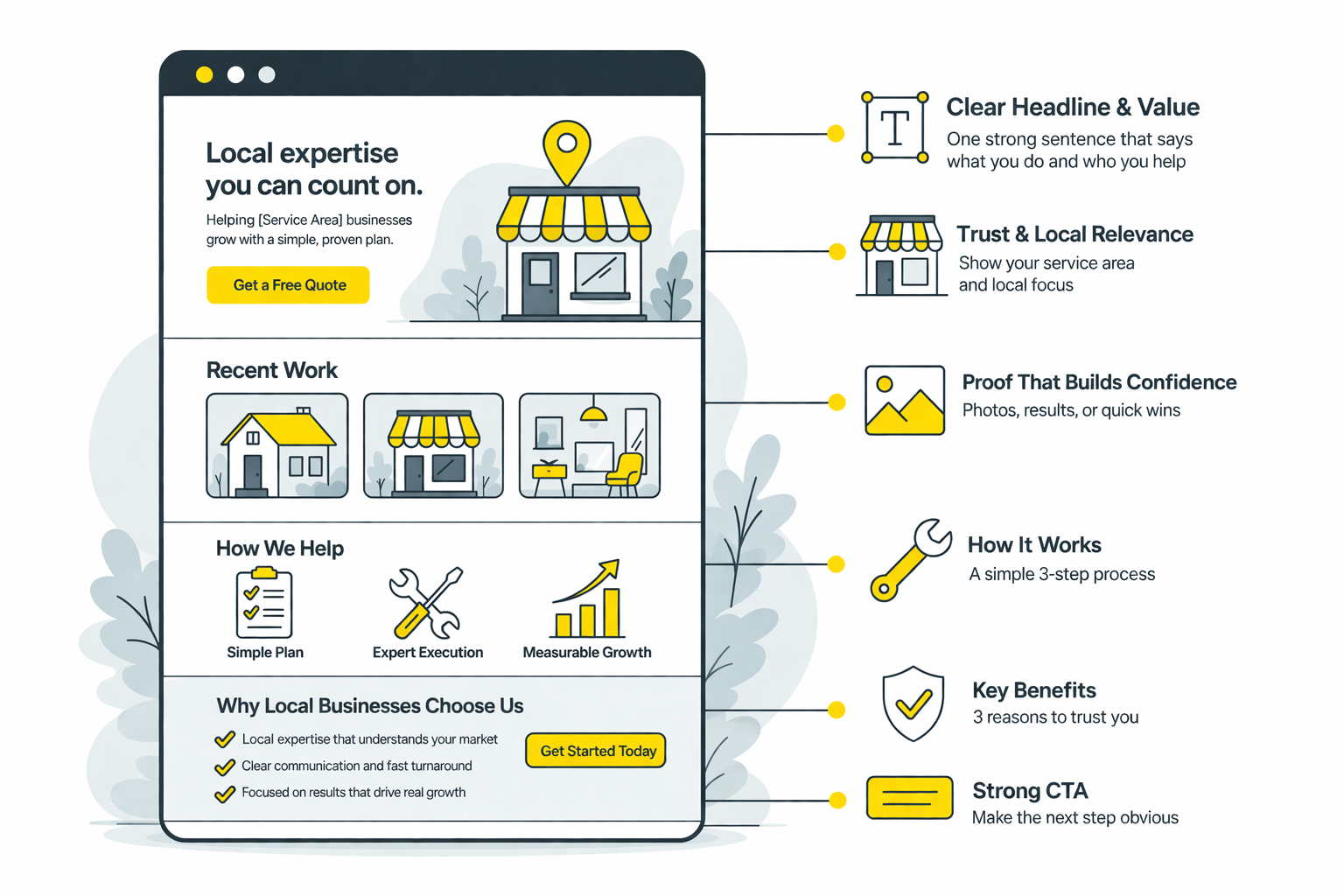
This is the right move for many small businesses. A lean landing page is often more effective than a bloated multi-page website built too early. It allows the business to:
- present a clear offer
- show proof quickly
- remove friction from inquiry
- start collecting leads without overbuilding
The website questionnaire reinforced this direction as well: the business offer was custom ergonomic furniture, the target audience was homeowners aged 30+, and the main call to action was contacting the business by form or phone.
That is enough to build a strong first conversion layer.
Stage 3: Create a repeatable content and decision-making loop
Getting first leads is not just about being online. It is about learning what makes people respond.
In the follow-up emails, the reporting framework was especially valuable because it translated content into decision-making. Reels were measured through views, reach, watch time, completion rate, engagement, shares, and profile activity after viewing. Posts were measured through reach, impressions, saves, engagement, carousel CTR, and profile visits. Stories were tracked with views, tap-forward/back behavior, exits, and replies.
More importantly, the strategy defined what to do with those numbers:
- high views with low retention means the structure of the video needs to change
- low views with high retention suggests testing stronger covers and opening hooks
- high saves indicate a theme worth repeating or extending
- high CTR posts can shape the visual direction going forward
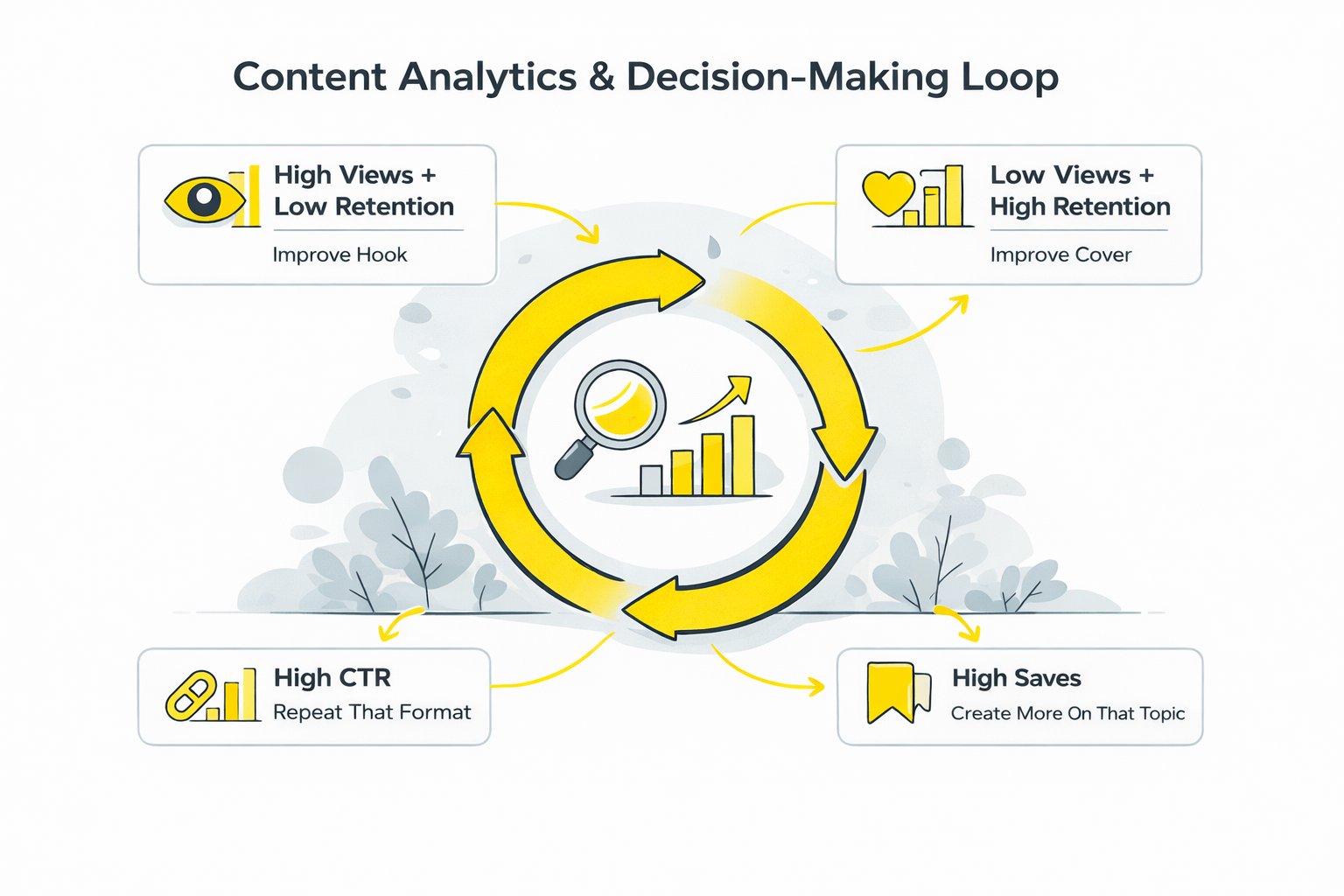
This is what many local businesses are missing. They post, but they do not learn. Or they look only at likes, which rarely tell the full story.
The strongest early-stage strategy is not volume. It is a feedback loop.
Stage 4: Use paid ads only after the business is ready
Only after trust, content, and a lead path are in place does paid traffic make sense.
The ad plan for this business was positioned as a later stage. It included:
- analytics and UTM setup
- optimization of the website and social profiles
- a one-month Meta test campaign focused on inquiries
- creative formats like short video, before/after images, and useful ad copy
- later expansion into Google Ads for high-intent searches and Pinterest for visual discovery
That is the correct order because now paid traffic has somewhere to go. Instead of sending cold traffic into an unclear brand, the business sends visitors into a system that already communicates quality, process, and trust.
What this looks like in practice
For a local business starting from scratch, a realistic rollout often looks like this:
Month 1:
- define positioning
- gather visual assets
- set content pillars
- begin posting consistently
Month 2:
- launch a landing page
- connect a simple contact path
- keep publishing and learning from engagement
Month 3:
- refine content based on actual response
- improve messaging and visuals
- begin small ad testing once the foundation is working
That sequence mirrors the recommended order in the strategy: prepare visual content, launch regular social content, create the landing page, run the first ad campaign, then analyze and scale.
It is not flashy. But it is realistic, affordable, and much more likely to produce first leads than trying to build a “full brand ecosystem” all at once.
Common mistakes local businesses should avoid
A few patterns come up again and again:
Starting with ads too early
If the content and offer are weak, ads will not solve that.
Overbuilding the website
A small, clear landing page usually outperforms an oversized site with no real proof.
Treating social media like decoration
Content should not exist just to “look active.” It should answer objections and build trust.
Ignoring process content
People do not only buy outcomes. They buy confidence in how the outcome is created.
Posting without measurement
The goal is not to be busy. The goal is to see what actually moves people toward inquiry.
The real goal is not “marketing activity.” It is momentum.
A lot of local businesses think they need a website, Instagram, SEO, and ads all at once. Usually, they need momentum first.
Momentum comes from:
- a clear offer
- visible proof
- consistent content
- a simple conversion path
- a process for learning what works
That is how a business goes from zero digital clarity to first real inbound leads.
Not through more noise. Through better sequencing.
Final takeaway
If your local business is not getting leads online, the answer may not be “do more marketing.”
It may be:
- clarify the offer
- show the work
- build trust through content
- launch a focused landing page
- then scale with paid traffic
That order works because it matches how real buyers make decisions. They notice, they evaluate, they trust, and only then they contact.
For local businesses, that is often the difference between random online presence and a system that actually generates leads.
Not Sure What’s Right for You?
Building a digital presence for a local business is not about doing everything at once. It is about putting the right pieces in place, in the right order.
At RiLel Digital Studio, we help service-based and product-based businesses turn their online presence into a clear, scalable lead-generation system through strategy, content, websites, and conversion-focused execution. Contact us if you want to build a stronger digital foundation before investing in more traffic.