Overview
Client: Alloy Modular
Industry: Modular Construction / Real Estate Development
Location: Canada
Scope: Website Strategy, UX/UI Design, Front-End Development, WordPress Development, Responsive Development, SEO Setup
Timeline: ~8 weeks
Platform: WordPress (landing page)
Live site: alloymodular.ca
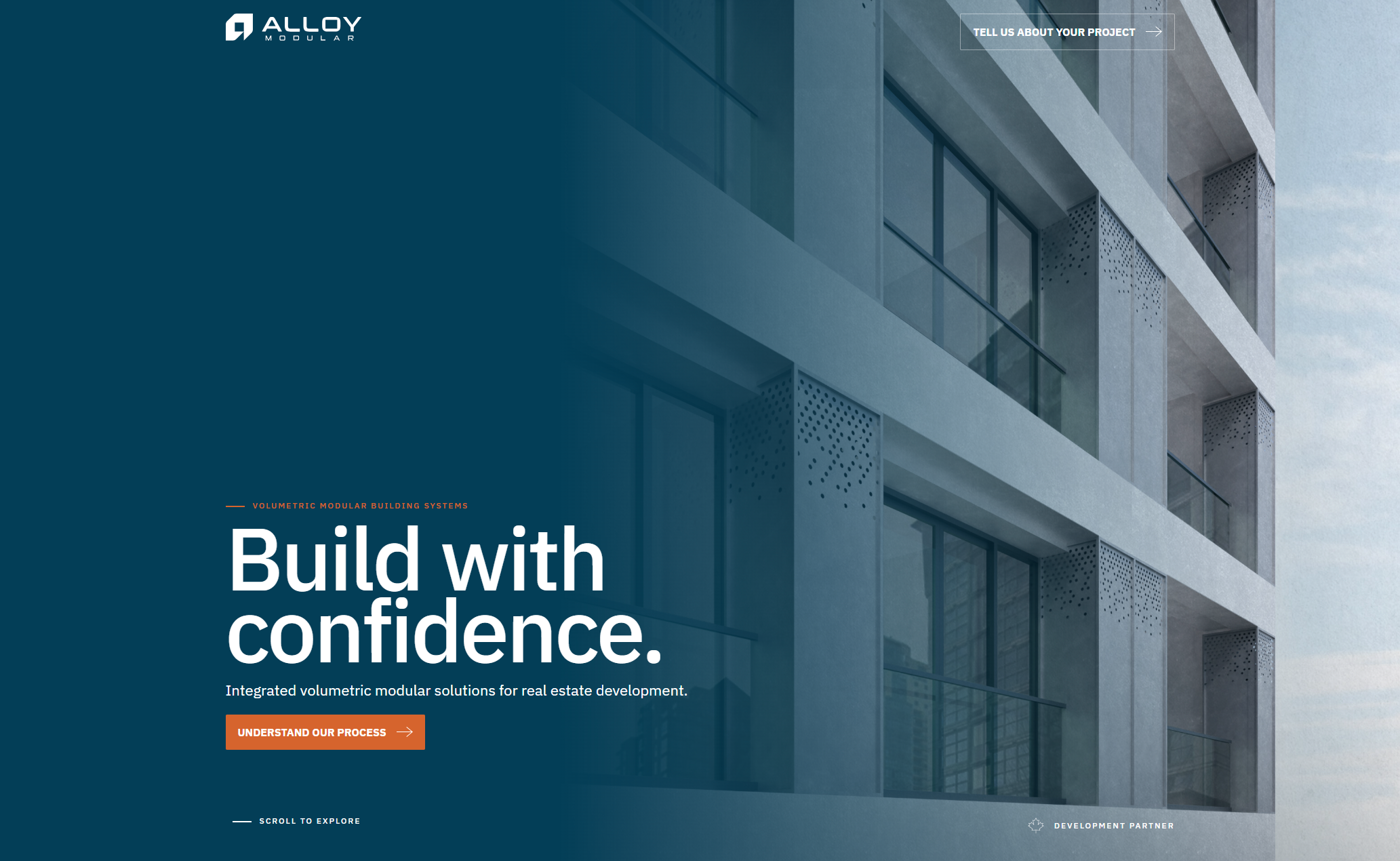
Alloy Modular is a Canadian modular development company providing integrated volumetric modular solutions for residential development.
As a new business entering a complex B2B market, Alloy needed a professional digital presence that could establish credibility quickly, explain its delivery model clearly, and support conversations with real estate developers and industry partners.
The first phase focused on a streamlined one-page website that could launch quickly while the company’s broader website, visual assets, and content continued to evolve.
The Starting Point
Alloy Modular was launching as a new business with its positioning and brand direction already being developed by external creative partners.
The company had a strong strategic foundation, but it still needed to translate that material into a website that worked for people encountering the business for the first time.
The initial website needed to do more than introduce the company. It had to help visitors understand what Alloy actually provides, how its modular delivery model differs from a traditional modular manufacturer, and why developers could trust the team to manage a complex project.
At the same time, many of the final visual assets—including project imagery, renderings, animation, and supporting media—were still in development.
The website therefore needed to be polished enough to launch immediately while remaining flexible enough to evolve with the brand.
The Challenge
Volumetric modular construction is a technical service with a relatively complex buying process.
For Alloy’s primary audience of real estate developers and industry professionals, the website needed to communicate several ideas quickly:
- Alloy provides more than modular units.
- The company coordinates an integrated process from early project planning through manufacturing, delivery, and installation.
- Its approach is designed to reduce complexity and development risk.
- The team has the technical and operational capability required for large-scale development projects.
The additional challenge was credibility.
Because Alloy itself was a new brand, the website could not rely on a long history of company-specific case studies or completed projects. The design and content therefore needed to communicate maturity through the clarity of the process, quality of presentation, and strength of the business positioning.
Discovery & Website Strategy
The project began with a focused discovery process around Alloy’s audience, positioning, messaging hierarchy, and immediate business goals.
Rather than launching directly into a large corporate website, we decided to begin with a one-page site that could provide Alloy with an immediate professional presence while the larger website continued to develop.
The primary audience was narrowed to Canadian real estate developers and industry professionals.
This helped keep the messaging focused instead of trying to address developers, architects, investors, government stakeholders, and other audiences equally on the same page.
The core website message was built around Alloy’s brand positioning:
Build with confidence.
Supporting messaging focused on:
- end-to-end modular delivery
- efficient project execution
- design and construction coordination
- developer-focused processes
- technical and regulatory capability
- reducing the operational complexity of modular construction
This positioning became the foundation for both the content hierarchy and the visual structure of the site.
Website Design Approach
The visual direction needed to feel established, architectural, and technically sophisticated.
The goal was to avoid two common directions in the modular construction industry:
- a highly industrial website that feels dated,
- or a highly futuristic startup aesthetic that makes the company feel experimental.
Instead, the interface was designed to communicate confidence and operational maturity.
The design combines:
- oversized, structured typography
- generous spacing
- architectural imagery and renderings
- restrained use of Alloy’s orange accent colour
- dark blue and neutral brand tones
- geometric details inspired by the Alloy identity
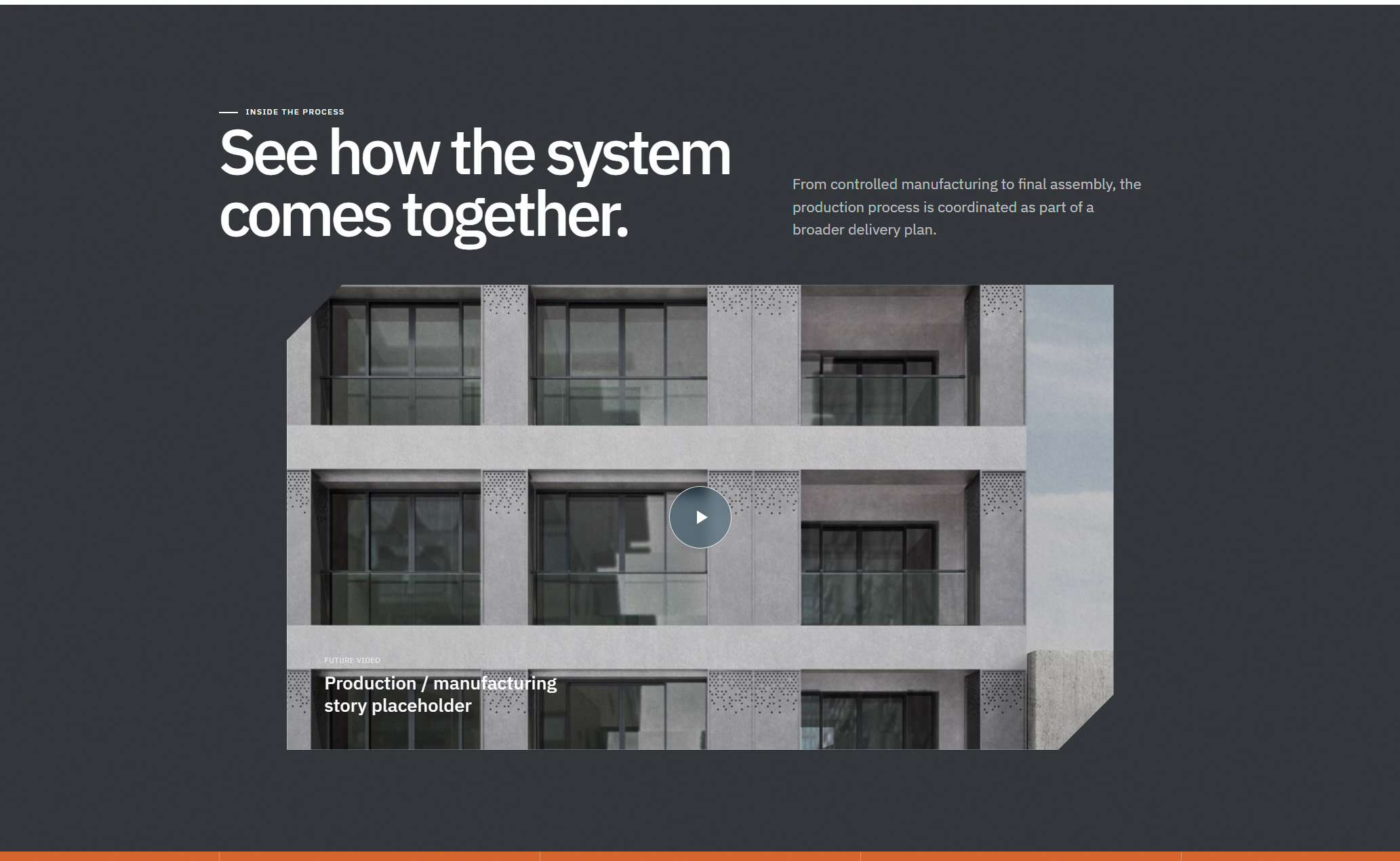
- distinctive curved image treatments
- subtle movement and interaction
The result is a modern corporate aesthetic that still feels connected to construction and real estate development.
From Concept to Prototype
Rather than developing the first design directly inside WordPress, we created responsive HTML concepts first.
This made it possible to work through the layout, hierarchy, typography, visual rhythm, responsive behaviour, and media placement before committing the design to the CMS.
We explored and refined several concept directions as Alloy’s branding, messaging, and visual assets became more established.
The prototype also made the site easier to design around temporary content.
Images, renderings, and video placeholders could be replaced later without requiring major changes to the overall page structure.
This was particularly useful because the branding and website were progressing simultaneously.

WordPress Development
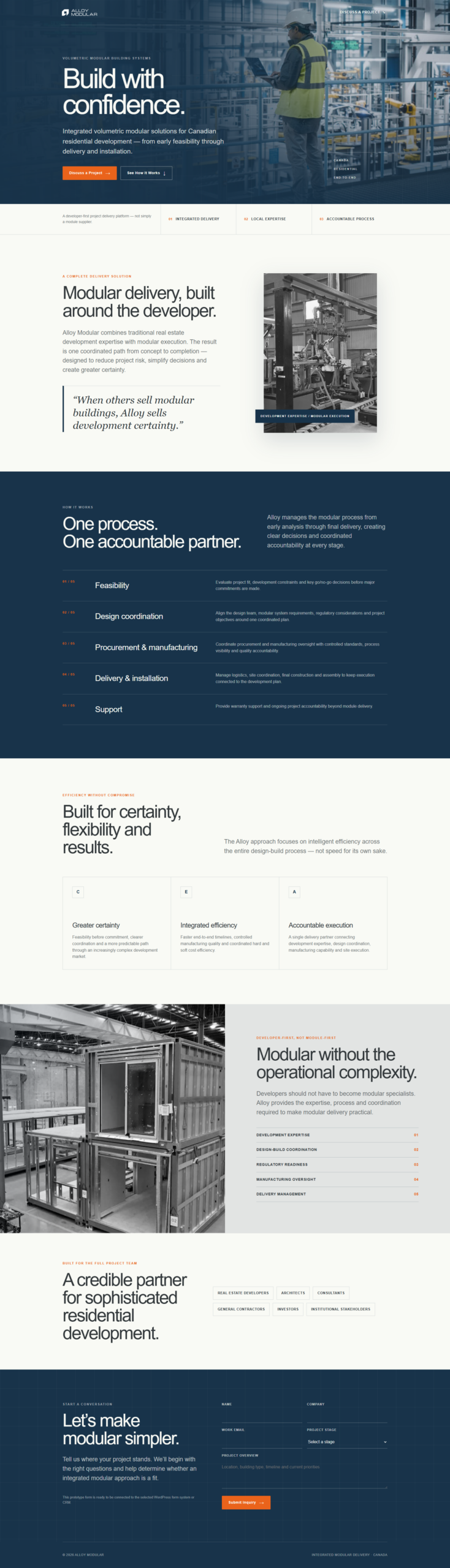
Once the visual direction was approved, the landing page was translated into a flexible WordPress implementation.
The production website was built so that Alloy’s team could continue updating content and replacing media as the company grew.
The build included:
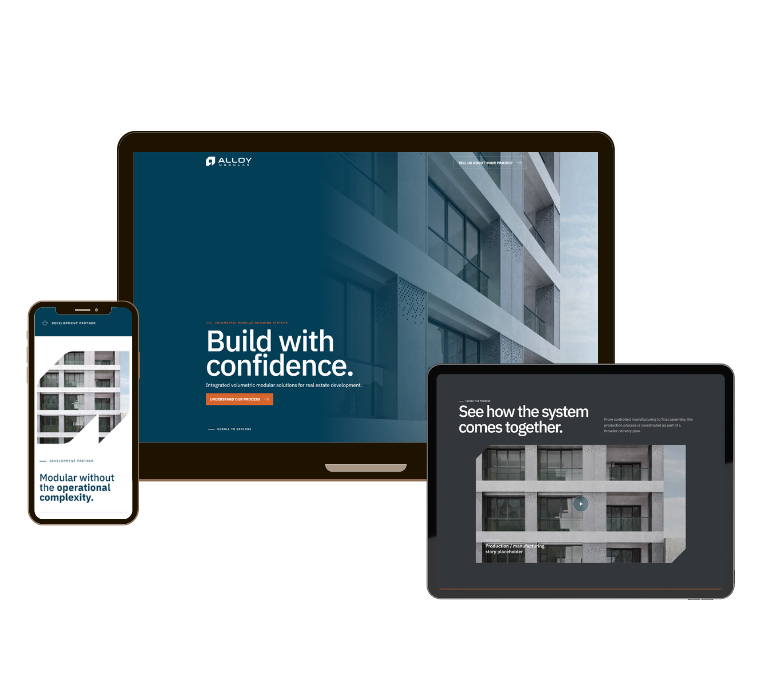
- responsive layouts for desktop, tablet, and mobile
- editable WordPress content
- custom Elementor styling
- reusable layout components
- project inquiry forms
- responsive media handling
- custom CSS for visual details not available through standard Elementor controls
- accessibility considerations including keyboard focus states and reduced-motion support
The implementation was intentionally kept flexible so the initial landing page could become the foundation of a larger Alloy website rather than a temporary standalone page.
Designing for Evolving Content
One of the more unusual parts of the project was that the website continued evolving after the initial launch.
New renderings, manufacturing footage, messaging revisions, and video content were introduced as Alloy’s marketing material developed.
The original design anticipated this.
Media areas were built so that static imagery could later be replaced with animation or video, while the modular page structure allowed sections to be revised without rebuilding the overall experience.
Later iterations included additional manufacturing content, updated calls to action, refined developer-focused messaging, and new video placements.
This approach allowed the website to grow alongside the business instead of becoming outdated immediately after launch.
Alloy Modular website mockup
SEO & Launch Setup
The launch also included the foundational technical setup needed for a new website.
This included:
- page titles and metadata
- basic on-page SEO
- Google Analytics setup
- Google Search Console configuration
- responsive and browser testing
- form testing
- production deployment preparation
Because Alloy was a new company, establishing this foundation early was important so future pages and content could build on a properly configured website.
The Result
Alloy Modular launched with a focused, professional website that gives the new company a credible digital presence while clearly explaining its integrated approach to modular development.
Instead of presenting Alloy as simply another modular manufacturer, the website positions the company as a development partner coordinating the complete project delivery process.
The initial landing page also created a flexible technical and visual foundation for the next stage of the project: expanding Alloy’s digital presence into a larger corporate website as additional projects, media, and company content become available.
Key Outcomes
- Launched Alloy Modular’s first dedicated digital presence
- Translated detailed brand positioning into a clear website experience
- Created a developer-focused information architecture for a complex B2B service
- Designed and prototyped the interface before WordPress development
- Built a responsive and editable WordPress website
- Created a flexible structure capable of accommodating evolving imagery, animation, video, and messaging
- Established the technical SEO, analytics, and Search Console foundation for future website growth